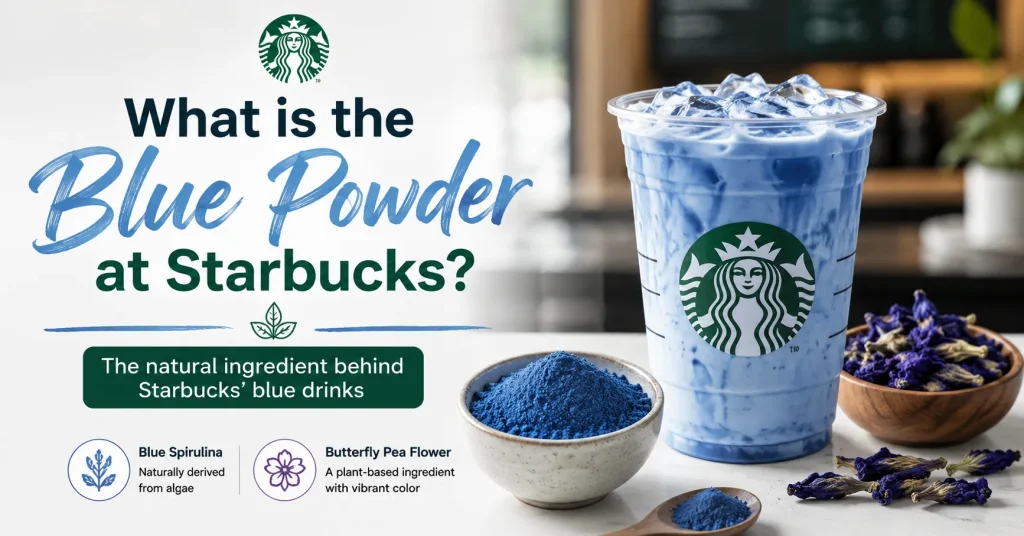
What Is the Blue Powder at Starbucks? Blue Spirulina Explained
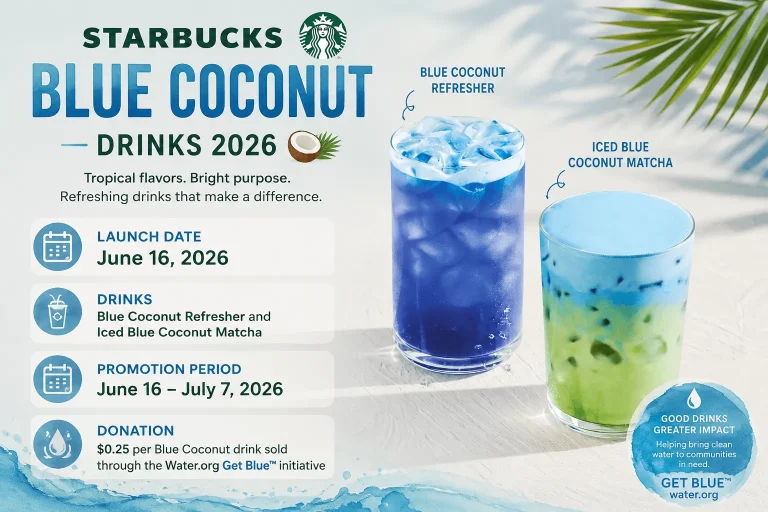
The blue powder at Starbucks is blue spirulina, a natural pigment derived from spirulina, a type of blue-green algae. Starbucks uses it to create vibrant blue-colored drinks without relying on artificial food dyes. It is currently featured in select seasonal beverages, including the Blue Coconut Refresher and Iced Blue Coconut Matcha.
If you’ve recently noticed bright blue drinks on the Starbucks menu and wondered what creates that color, this guide explains exactly what blue spirulina is, where Starbucks uses it, how it tastes, and whether it’s safe to consume.
important points
- The blue powder at Starbucks is blue spirulina
- It comes from natural algae (spirulina)
- It is used as a natural coloring ingredient
- It appears in drinks like Blue Coconut Refresher and Blue Coconut Matcha
- It has been used in limited-edition Starbucks drinks before
What Is Blue Spirulina?
Blue spirulina is a natural extract made from spirulina, a nutrient-rich blue-green algae. The blue color comes from a pigment called phycocyanin, which is separated from the algae and used as a natural food coloring.
Unlike artificial blue dyes commonly found in candies and soft drinks, blue spirulina provides a vibrant blue appearance from a natural source. Because of this, it has become increasingly popular in smoothies, wellness drinks, desserts, and specialty beverages.
Quick Definition
| Term | Meaning |
|---|---|
| Blue Spirulina | Natural blue pigment from spirulina algae |
| Source | Blue-green algae |
| Purpose | Natural food and beverage coloring |
| Artificial dye? | No |
Why Starbucks Uses Blue Spirulina
Starbucks uses blue spirulina mainly for visual appeal and natural ingredient positioning. It allows the brand to create eye-catching drinks without artificial coloring.
It is especially popular in seasonal beverages designed for social media appeal and refreshing summer themes.
Key reasons include:
- Natural alternative to synthetic dyes
- Bright and vibrant blue color
- Works well in cold beverages
- Enhances seasonal drink visuals
- Minimal impact on overall flavor
Which Starbucks Drinks Use the Blue Powder?
Blue Coconut Refresher
This drink blends coconut flavor, fruity notes, ice, and blue spirulina. The powder is shaken into the beverage, giving it a bright ocean-blue color.
Iced Blue Coconut Matcha
This drink combines matcha, tropical flavors, and toasted coconut cold foam. The blue spirulina is used in the cold foam to create a layered blue-green visual effect.
Previous Starbucks Blue Drinks
Starbucks has also used blue spirulina in past limited-edition drinks, including colorful promotional Frappuccinos that gained attention for their bright blue appearance.
Does Blue Spirulina Affect Taste?
Blue spirulina is mainly used for color, not flavor. In most Starbucks drinks, its taste is very mild or barely noticeable.
The main flavors usually come from ingredients like coconut, mango, matcha, or berry bases. Some people may detect a slight earthy note, but it is generally subtle.
Is Blue Spirulina Safe?
Yes, blue spirulina is widely considered safe and is commonly used in food and beverage products around the world.
It is found in:
- Smoothies
- Protein drinks
- Frozen desserts
- Energy beverages
- Specialty coffee and tea drinks
Starbucks uses it in approved menu items as part of its standard ingredient formulations.
Is the Blue Powder Natural or Artificial?
The blue powder is natural. It comes from spirulina algae rather than synthetic chemical dyes.
Because of this, it is often used as a cleaner-label alternative in modern food and beverage products
Blue Spirulina vs Artificial Blue Dye
| Feature | Blue Spirulina | Artificial Blue Dye |
|---|---|---|
| Source | Natural algae | Synthetic chemicals |
| Color | Soft natural blue | Bright artificial blue |
| Usage | Specialty drinks | Processed foods & candy |
| Starbucks use | Yes | No |
Also read
FAQs
What is the blue powder at Starbucks made from?
It is made from blue spirulina, a natural pigment derived from spirulina algae.
Is Starbucks using artificial coloring?
No, Starbucks uses blue spirulina as a natural coloring ingredient.
What drinks contain the blue powder?
It is used in drinks like the Blue Coconut Refresher and Iced Blue Coconut Matcha.
Does blue spirulina have caffeine?
No, blue spirulina itself does not contain caffeine.
Does it change the taste of drinks?
No, it mainly affects color rather than flavor.
Is blue spirulina healthy?
It is commonly used in health-focused products, but Starbucks uses it mainly for coloring.
Has Starbucks used it before?
Yes, it has appeared in previous limited-edition colorful drinks.
Why are Starbucks drinks blue?
The blue color comes from blue spirulina used in seasonal beverage recipes.